
Gnizah
I found the book Dewarim (Deuteronomy) in the streets of Jerusalem. There was a hole burned into its cover. I wondered about the story behind it. In accordance with the Jewish tradition of Gnizah, I buried the book in a cemetery in Jerusalem. For me, it was an act that honoured the sanctity of the book – an attempt to reconcile and heal the wound. But it was also a farewell to a religious tradition and a surrender to the processual nature of life and nature. Like sowing a seed in the earth, I surrender the form to possible change and growth.
Jerusalem In Plural
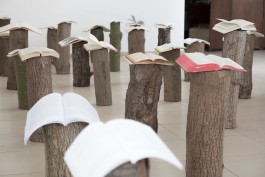
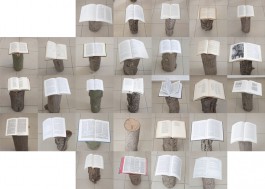
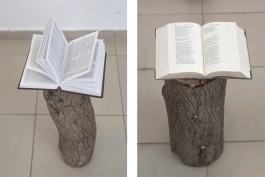
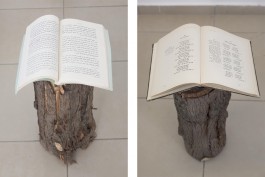
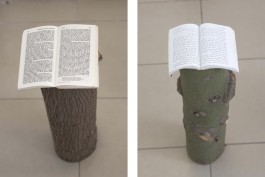
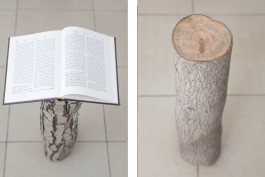
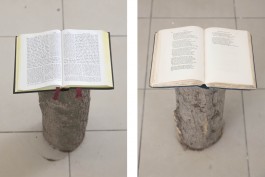
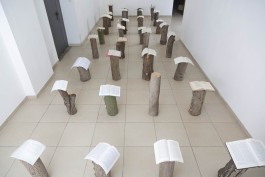
32 tree trunks with books lying on them. The books are about Jerusalem and represent the diverse and contradictory interpretations of the holy city. They range from primary religious texts of the three monotheistic religions, reports from pilgrims to Jerusalem, accounts from crusaders, Islamic literature (Fadā'il) about Jerusalem, Jewish poetry and archaeological reports to historical accounts.
The linear arrangement of the tree trunks resembles a military cemetery, thus emphasising the more exclusive aspects of the interpretations of Jerusalem and the associated claims and conflicts.
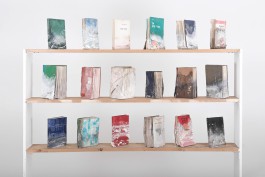
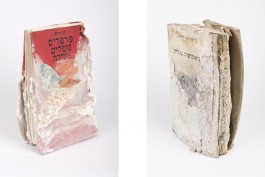
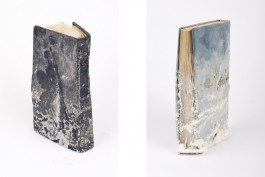
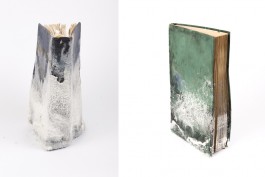
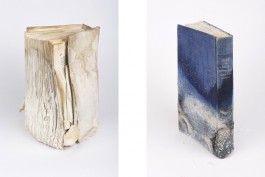
Pillars of Salt
A bookshelf with 18 salted books.
The salted books question the value and function of the book by combining the ambivalent metaphor and essence of salt as used in Jewish and Christian tradition. Like the preservative effect of salt, a (historical) book attempts to preserve history. Preservation works by removing water, which stops the metabolic processes of life and thus maintains a static form. In this respect, the work refers to the story of Lot's wife, who turned into a pillar of salt by turning towards her disappearing past. In contrast, a book can broaden and open up perspectives. This inspiring function is the blessing of a book, which can be linked to the symbolic aspect of salt as a blessing.
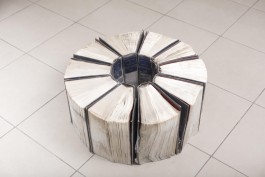
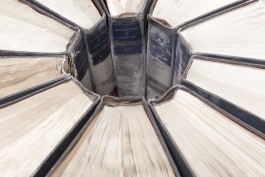
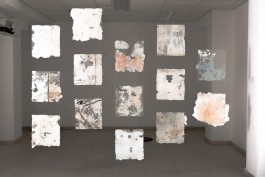
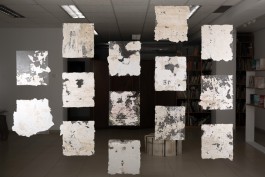
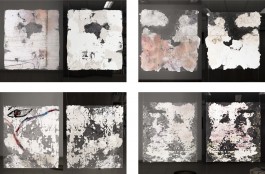
Archeology Of A Facade
14 hanging plexiglass panels with wall withdrawals.
They were glued to the façade outside the gallery and then removed again, so that parts of the walls were detached and the layers underneath were revealed. Inside the gallery, the hanging created an imaginary wall with an exterior and an interior space.
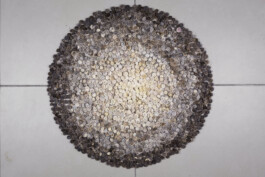
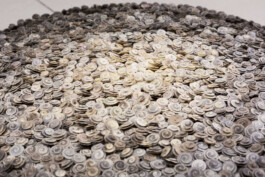
יהי אור (Let there be light)
Arrangement of Medicago orbicularis seeds
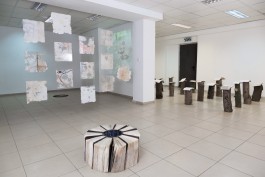
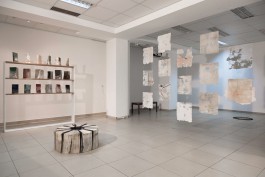
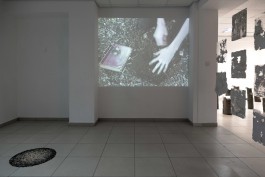
Exhibition View