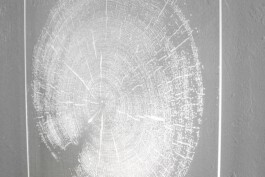
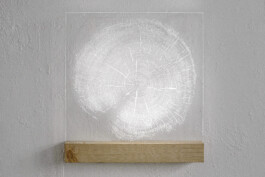
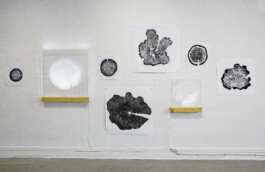
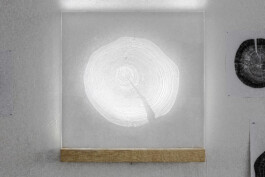
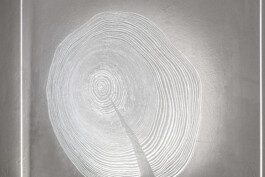
I photograph the cross-sections of a felled tree, either still fresh in the forest or already dried—marked by shrinkage and cracks—and create a template through digital processing. From the cross-sections of a felled tree, I create true-to-scale engravings by hand on acrylic glass. For me, the manual process of engraving is also a meditation on the tree, on growth, age, crisis, life, and death.
The engraved acrylic glass panels are illuminated from the edges of the panels. The engraved symbols refract the light passing through them and glow.
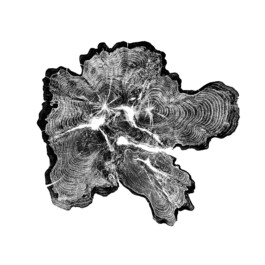
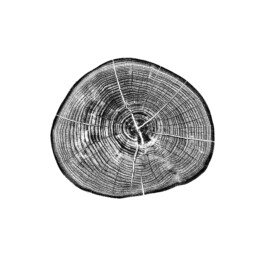
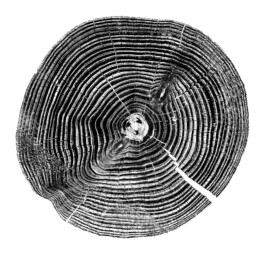
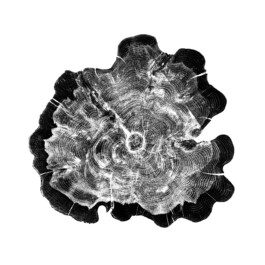
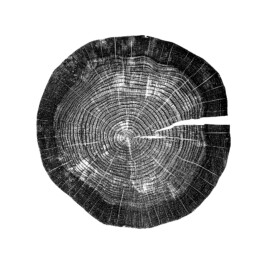
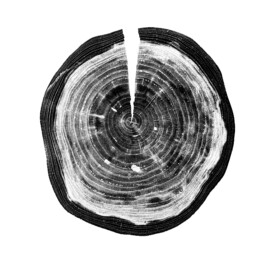
After spending a long time looking at books in terms of how they preserve, organize, and generate knowledge, as well as issues around the static nature and exclusivity of certain ways of representing knowledge, I'm now getting more into their materiality and origins. For books, it's wood, and for wood, it's trees. A tree represents a living form or process of knowledge, a kind of material and materializing learning, a dynamic development in dialogue with its environment. In view of the ecological crises, this dialogue is strained and challenged.
What is the knowledge of a tree? What lessons can it teach us? What does its biography reveal to us? The annual rings in the horizontal profile of the trunk tell us a lot about its life, its location, and the climatic environmental conditions. They are a kind of fingerprint of the tree. However, these stories only become visible when the tree is felled, i.e., through its death.